

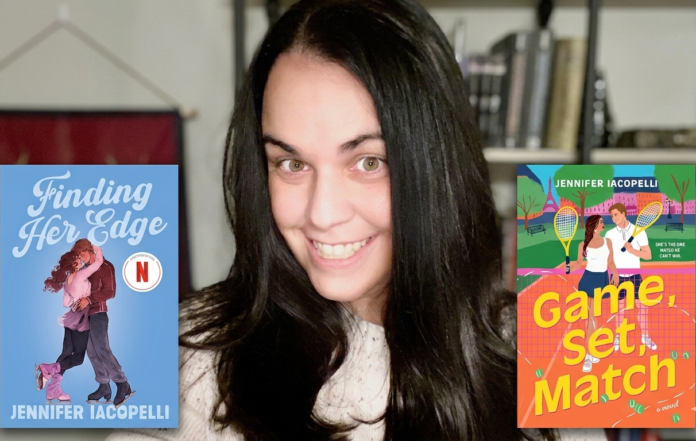
It’s sometimes hard to articulate, but there is a specific, electric kind of joy when watching a friend who has been busting her ass for fifteen years finally (finally!) hit the stratosphere. I’ve known Jennifer Iacopelli since we were both active in The 100 fandom (wild times, my friends) with big dreams and messy drafts, so getting to officially sit down with her after over a decade of tweets, DMs, texts, and writing in similar circles feels less like a formal interview and more like a victory lap. Iacopelli is very much having her moment; her Young Adult (YA) novel, Finding Her Edge, was adapted for TV and exploded into a Netflix sensation overnight. With a season two renewal not long after its streaming debut, and hopefully way more story to explore on Iacopelli’s book side (I, too, am rooting for a second book, Finding Her Edge readers). Let’s just say that seeing her name attached to a hit Netflix adaptation feels like a win for every writer who’s ever been told to “return to their real life.”
But don’t let the sudden glitz and glamor fool you—this compelling author is the same hardworking librarian by day, writer by night (and most likely weekends) she’s always been. Not to mention, she’s refreshingly unapologetic, admitting she’s the person who thinks of the perfect comeback three weeks too late while acting out both sides of the argument in the shower (same, girl–same). In a world of curated personas, Iacopelli is candid about her often lovable neuroses, her day job, and the well-deserved fact that she’s made more money in the first three months of 2026 due to Netflix’s adaptation of her novel than in the previous fourteen years combined.
If you’ve read any of her books, you know exactly what is at her core: female ambition. She doesn’t just write about young women who excel at sports; she writes about strong women who are world-class and boldly driven. As someone who has watched her evolve within the writing industry, I can say with certainty: we’re all just living in Jennifer Iacopelli’s Prime Universe now. Quite frankly? It’s the absolute best feeling being here. We dove into everything from the nitty-gritty of sports accuracy to why her characters probably all need therapy, and her upcoming tennis romance Wildcard (Match Point #2), scheduled for June 2026 release…
MM: For the uninitiated, what is the elevator pitch for the Match Point series?
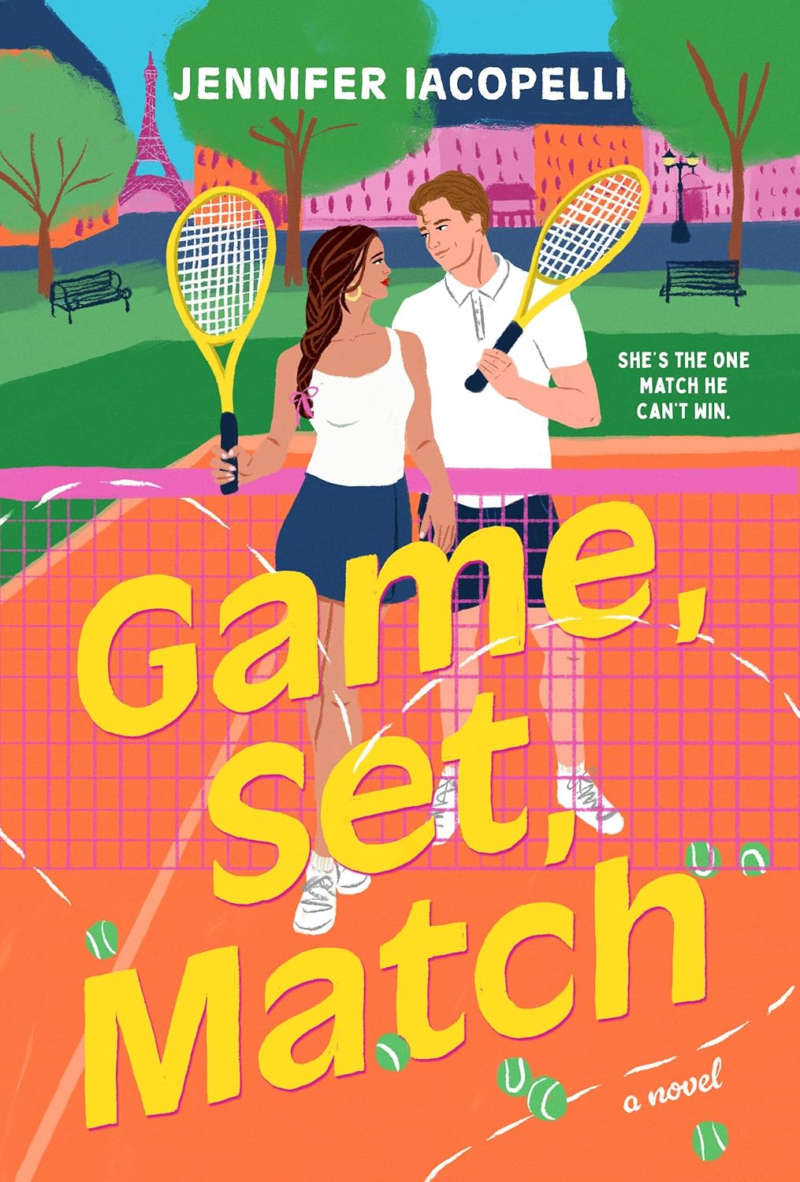
JI: I write ambitious women and the boys who fall in love with them. Tennis, my best friend’s brother, the bad boy of tennis, absolute incredible friendships between young women – that’s my favorite thing about what I write is that I get to write incredible friendships between women. And you get to go to the French Open and then Whimbledon and then hopefully, if enough people read Game, Set, Match and then Wildcard, you get to go someplace else.
MM: With competitive tennis, it’s incredibly intense both physically and psychologically. What kind of research goes into writing these books? What’s your process for making sure logistics are accurate?
JI: At least for tennis, for me, it’s a lifetime of fandom. I became a tennis fan at seven years old. Jennifer Capriati had just taken the world by storm. I’m old. It was a long time ago. I’ve been a tennis fan since then. Part of it was sheer osmosis for three decades. The other part of it, once I decided okay, I want to write actual professionals doing this, I need to do some research on the actual world. It was biographies, reading up on history, all that kind of stuff. It was watching old matches that I had vague recollections of as a fan but I sat down to watch from a particular player’s point of view. I watched a lot of Stephanie Graf for the first book because I took a lot of inspiration for Penny Harrison who is our – I wouldn’t say main character but she gets the big romance arc in book one. There were a lot of profiles, interviews and just studying match play.
MM: Do you ever feel like you’re ‘under a microscope’ when someone from the industry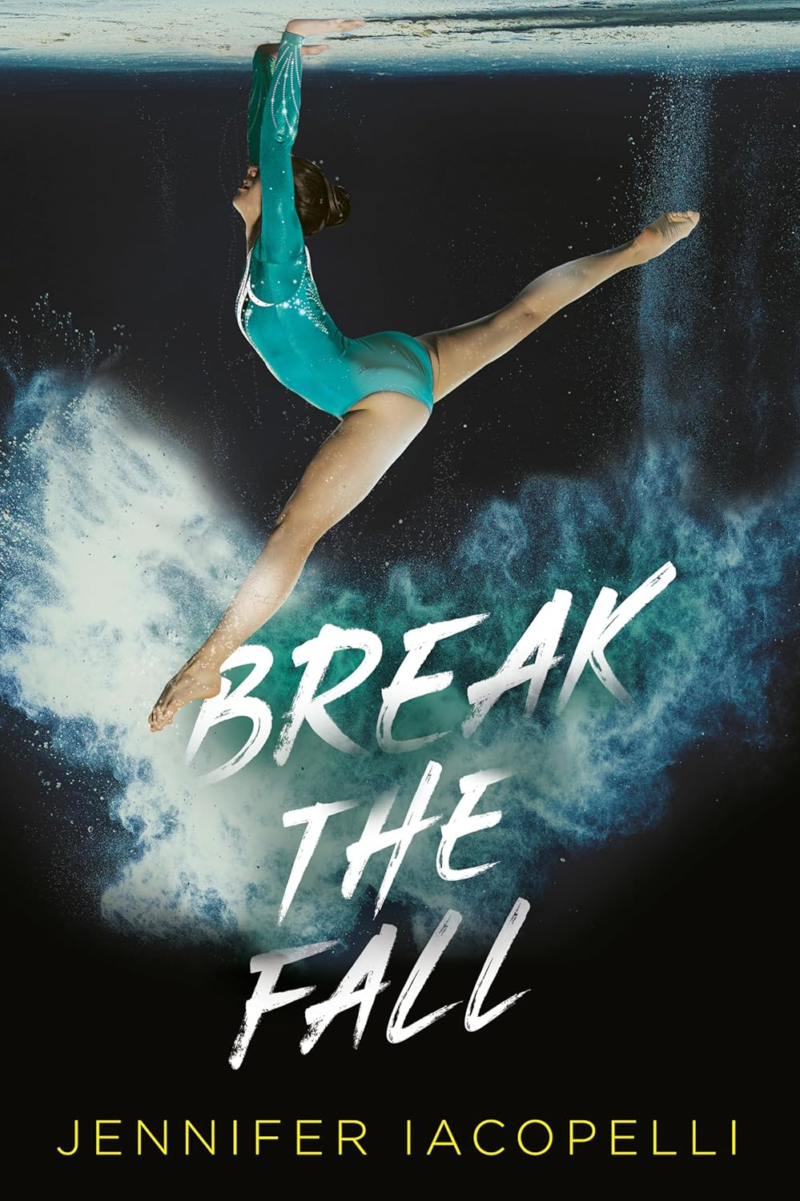 actually sits down to read your book?
JI: Every time I talk to someone—whether it’s about tennis, figure skating, or gymnastics—I say, ‘I did my research and my best.’ Sometimes things change for dramatic effect, but I’ll never write anything obviously wrong regarding the nuts and bolts of the sport. For my novel Break the Fall, someone commented, ‘That’s not how the Olympics work; it competes every other day—women, men, women, men.’ I know that, but then the book would have been 200,000 words. It’s a YA novel and I needed to keep it under 90,000 words or they wouldn’t publish it. Between the book existing or depicting the sport with nitty-gritty accuracy, you lean toward the book existing in a format digestible for the market. You keep the spirit of it. If you have to change details that don’t matter to the sport itself, you do that.
MM: You keep the integrity intact.
JI: Exactly. Gameplay is how it goes. It is 100% accurate. Sometimes the schedule gets messy or that sort of stuff that you have to condense for dramatic effect. If you want exact accuracy, the beauty of sports is you can go watch those. I’m a sports fan. I’m happy to do that! But sometimes in fiction you have to play with the rules of reality a little bit.
MM: We have to let it go every once in a while. Your Match Point series introduces readers to characters like Penny, Alex, Indiana, Jasmine. Which aspects of their personalities or the relationships were you most excited to explore while writing these stories?
JI: I always joke that I tend to give my characters my flaws rather than my good parts. In Game, Set, Match, I gave Penny my neurosis, my perfectionism, and my inability to let certain things go. She channeled that personality trait into becoming a world-class professional athlete. I’ve channeled it into things that did not get me center court at Wimbledon. I loved giving her that because it’s a trait elite athletes have to a more exponential degree than I do. I wanted to see how that interferes with her dreams.
 For Indiana, I gave her a flaw I wish I had: she says whatever pops into her head, whatever the consequences. I’m the person who realizes what I should have said three weeks later and acts out the conversation in the shower. Not Indy; it just comes right out.
For Jasmine, I had to play with that because I don’t think we’re very alike. She is the daughter of two Grand Slam champions and Olympic Gold Medalists; the expectations existed for her before she was even conceived. People were like, ‘Their kids! Oh my god!’ which is the reality for children of successful athletes. I took my eldest-daughter need to achieve and gave that to her. She expects herself to be proficient and excellent at everything she does, particularly tennis, because of her parents.
Alex is an interesting guy because he is not my type, but he’s Penny’s type. I gave him things I personally don’t find attractive but I know a lot of people do. He is a reformed bad boy—incredibly talented and gifted. One of the things that drives me crazy is people who are talented without having to try as hard as everyone else. I gave him some stuff that grinds people’s gears in a way that makes Penny fall in love with him. She sees him as a yin and yang; she has to work super hard and looks at him like, ‘You could have thrown all of this away, how dare you?’ That creates nice friction and tension in their relationship.
MM: You manage to weave high-stakes athletic rivalry with the intimate ‘slow-burn’ of YA romance. What’s your secret to balancing the adrenaline of the game with the emotional weight of your characters’ relationships?
JI: It’s always about envisioning my characters as full people. I keep going back to Break the Fall, but it’s relevant here. I’ll never forget people talking about Olympic gymnasts—these younger women, mostly teenagers, who were thriving. Someone once said they were stunned that a certain gymnast liked a very juvenile reality TV show. My thought was, ‘She’s a fifteen-year-old girl; of course she likes the thing made for fifteen-year-old girls.’ You could see the light bulb go on in that person’s head: ‘Oh! She’s a person, just like everyone else.’
For me, while they are elite athletes, ultimately that’s their job and their chosen career path. At your job, you have colleagues—some are friends, some are just friendly, and some are very much not your friends. That’s the reality for athletes as well. They have families and friendships, and those relationships can be super complicated.
If you ground yourself in the idea that these are real people with the same connections everyone else has, you just have to ask, ‘What does that look like for someone who does this very specific thing as a job?’ For Penny, long distance is hard; she doesn’t have the relationship with her parents she’d like because she never sees them. For Jasmine, her parents don’t lay the same level of expectation on her that the world does, but it still affects their relationship.
You have to be mindful that they are people and treat them as such. Perhaps because my inspirations were mostly television—where stories intersect and there isn’t just one main character—I naturally learned how to plot a narrative where all of those things intertwine. It came easily to me in a way that other writers might have to work a bit harder to learn.
MM: Obviously we are seeing a surge of stories about female athletes across film, television, literature. Why do you think audiences are especially drawn to these narratives right now?
JI: For sports, I’ve been banging this drum for fifteen years. Ultimately people have figured out that sports are narrative. Sports are just stories. Sometimes they’re not great stories. Sometimes the bad guy wins. Sometimes, because of the unpredictability, because they’re not scripted, you don’t get the ending you’re rooting for or want, and you’re not guaranteed a satisfying ending, but ultimately sports are narrative. They are absolutely the perfect place to set any kind of medium, to set a TV show, a movie, or a book. I call it a cheat but it’s not really a cheat, knowing a sport and understanding a sport makes it very easy to set up a conflict or set up a relationship between two people, between a family, a romantic relationship. There is something about having that natural conflict and then the duality of it, where if it’s a sports romance, how does the sport play out but then how does the romance play out? If it’s something like Heated Rivalry where you’re watching over and over again these young men compete and watching how that impacts their relationships with each other especially as that’s told over the course of many years. I think it’s a natural progression for sports fandom and for the book world as well. I’m really excited that it’s happening because here I am. I’ve been waiting!
MM: It’s ironic because the last two interviews I did recently, one was with an actress in the vertical space–
JI: Which is booming right now.
MM: It’s insanity.
JI: I have a friend who writes scripts and it’s booming.
MM: She referenced Heated Rivalry because it’s more of a queer story, and you don’t have to be queer to like queer stories and it’s crazy that it’s just bridging the gap in terms of obviously sports writing, the avenues with Finding Her Edge, it’s insane that this one thing could open it up for so many different spaces that aren’t really related. It’s great for you. It’s great for everybody.
JI: We like to say rising tides raise all ships. We’re all here. We’re all here to be like “yes! This is what we’ve been trying to tell you all these years! Come with us. It’s a good time.” For any story you’re looking to tell, it’s a good time.
MM: It feels like the common denominator is Canada. Filming in Canada.
JI: It’s so funny because the fear for a lot of the people involved in our production early on was like “oh god, people will think it looks Canadian.” Canadian was used in the pejorative for so long as far as TV is concerned. But you and I know that things made in Canada, for decades now, are some of the highest quality TV out there. I think it started with Schitts Creek. People were like “oh, Canadian? Interesting.” But that wasn’t explicitly set in Canada. But now it’s like oh, Canadian TV is the thing.
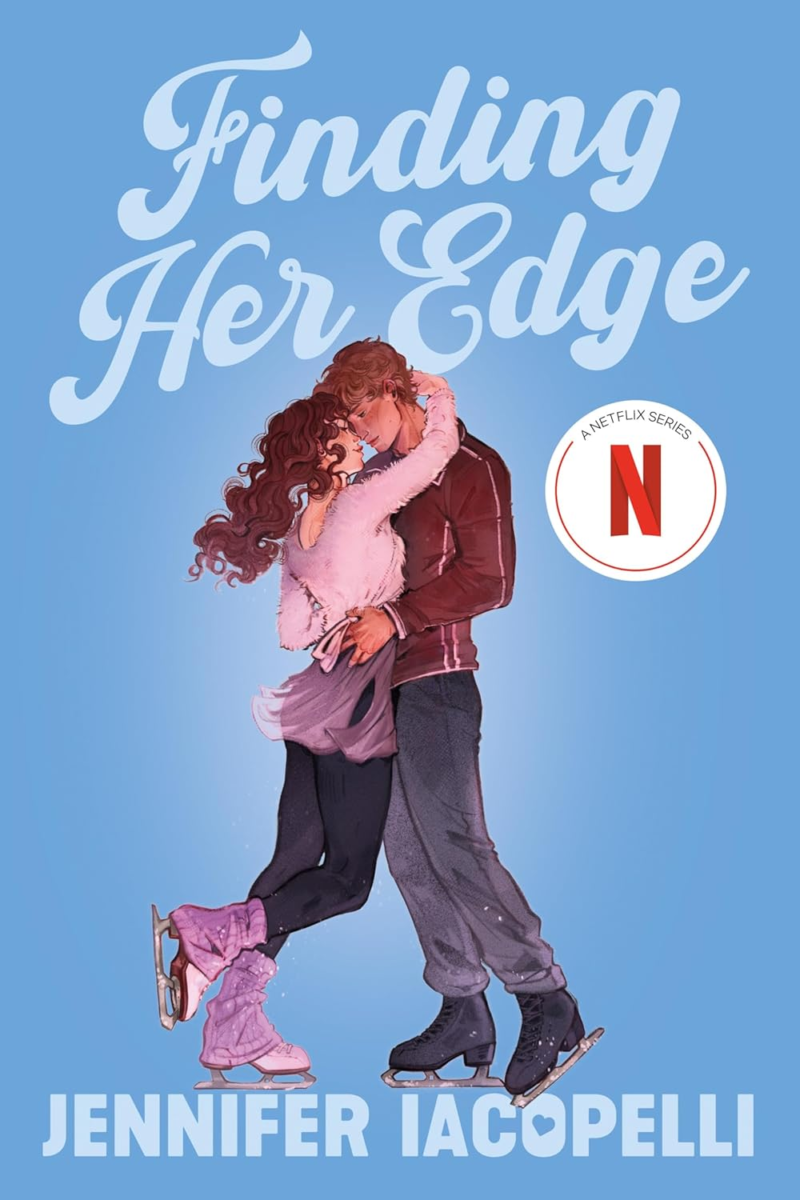 MM: Readers are discovering you through Finding Her Edge and you have your die-hards following you over to the adaptation. Readers love a good rival to something more storyline. What is it about that dynamic that makes it an irresistible one to write and to read and consume?
JI: Because it’s the most unlikely thing to happen in real life. You have someone you actively dislike or don’t get along with or definitely are not a fan of. And that thing, that probably is the thing that bothers you about them, ultimately ends up being the thing that brings you together. I think a little bit, that’s everyone’s fantasy where that thing that’s a negative turns out to be a positive. We need a lot more positivity in the world right now. Ultimately, especially because I have a soap box about enemies to lovers and rivals to lovers and how it doesn’t always work in contemporary stories. I think it needs to be rivals for something that’s obviously important but ultimately not super value-driven, in order for it to work in contemporary story telling. Because if you have separate values–it’s why a lot of the left and right politics romance don’t work. There’s a bit of an irredeemability about some of the things they would have to believe. As long as you have a solid rivalry that is based on mutual love. Look at Heated Rivalry. They both love hockey. They both love their families. They are both looking for solace in a world that has kind of abandoned them a little bit because of who they are and they feel like they can’t be who they are. For Adriana Russo in Finding Her Edge, she has this antagonistic relationship with the guy that is going to be her partner but the only way she’s going to save her family is by skating with that guy. Ultimately, the only way she can do what’s right for herself is by hurting that guy. And then we’ll see what happens in season two!
MM: Most authors dream of a screen adaptation, but few experience it. When you were writing, was a film or TV deal ever the ultimate goal? And after the initial ‘hiccups’ in development, what was the specific moment you realized this was finally becoming a reality?
JI: I always tell every single newbie author I meet: never expect that thing to happen. ‘They’ll make your show into a Netflix series’ is almost a joke. It’s even a meme for social media content where people create Netflix banners to pull in new readers—I’ve been fooled by more than one! Part of me was very much like, ‘This is not going to happen.’ Because they don’t. I’m making up statistics here, but maybe 1-2% of books get optioned, and then 1-2% of that percentage actually get made. The fractions feel correct. So the whole time I thought, ‘This is just free money they gave me to try to make this happen, but it probably isn’t going to.’
I had a fantastic team working their butts off, but lots of projects have fantastic teams and still don’t get off the ground. A lot of it was really good timing. The first moment it hit me was the moment I was told, honestly. I got home from work—I do have a day job, despite what people may believe about authors with Netflix adaptations—and Jeff, our Executive Producer and Showrunner, gave me a call. When Jeff calls, it’s never for nothing, and it’s not going to be bad. I knew when his name popped up that it was good news.
I’d been told about a month before that it was looking really good, but the I’s weren’t dotted and the T’s weren’t crossed. Until a contract is signed, it’s not real. I told him, ‘Please don’t tell me until it’s legit, legit.’ Then he called and told me, and I freaked out. It’s been a dream ever since.
For a while, it didn’t feel tangible. People knew it was happening, but filming is a very nebulous thing, especially in Canada. It was like, ‘Oh, my girlfriend in Canada who definitely exists!’ People would ask if it would really be on Netflix here since it was filming there. There were so many caveats I had to explain that it felt like I was lying to people even though I was telling the truth.
Then it came out. It was successful, and we’re getting a Season Two, which is insane. It timed beautifully with Heated Rivalry coming out right before it. While we don’t share the exact same audience, we share commonalities: Canadian TV, ice sports, romance. We both do yearning really well. The outcome of the yearning is slightly different, but it’s there. And then the Olympics right after that really helped.
Now I live in a world where my books have been made into a successful adaptation, which is a completely different thing than just hoping it’s good for your career. There are a million ‘what ifs’ in your head: What if it’s bad? What if no one watches? What if you hate everyone involved and have to pretend you like them? I’ve had author friends tell me, ‘It was the worst thing I ever did and I’m so sorry I took the money.’ I’m so glad that’s not my experience. I’m glad I like them, that they did a good job, and that people are responding to it. Even when people disagree, they’re saying they want more. It’s been a great time, I’m not going to lie.
MM: You can’t go wrong with that. The Netflix adaptation of Finding Her Edge made some changes from the novel, especially with Adriana and Brayden’s partnership and how it ended.
JI: If you don’t know how it ends, google me! Everyone on the internet is yelling at me about the ending.
MM: How involved were you in terms of these conversations about Adriana ultimately choosing Freddie in both versions. But in your original piece she continues to skate with Brayden and in the show she does not. There’s going to be that rivalry with Riley and Brayden now against Freddie and Adriana. Are you happy that they went in that direction to set up a second season?
JI: As far as official roles, I did not have one. “Based on the book by” is my sole contribution to the show. Other than my lovely cameo. I did get a chance to sit with the writers early on to build out the world a little. Because obviously when you’re writing a novel from the point of view of a sixteen year old girl, there are things she is not noticing about certain people in her life and the world around her. I helped them out a little there but that was very early on though. From there, every once in a while, I’d get a text like “hey if so and so was skating a routine with this what vibe would that song be?” Stuff like that. But definitely not actual content. That is their purview that is what they are experts in. I didn’t know there would be that switcheroo. I wanted to be kind of unspoiled for the ending because I figured things were going to change. TV and books are totally different mediums and therefore, things have to change in order for a story to work in those different mediums. I went in knowing that. I’m also the least precious person in the world with my work. I came up in fanfic. I love transformative work. And someone spent millions of dollars to make super high budget fanfiction of my book. I’m thrilled. I was going to be thrilled no matter what and it turns out I’m really, actually thrilled.
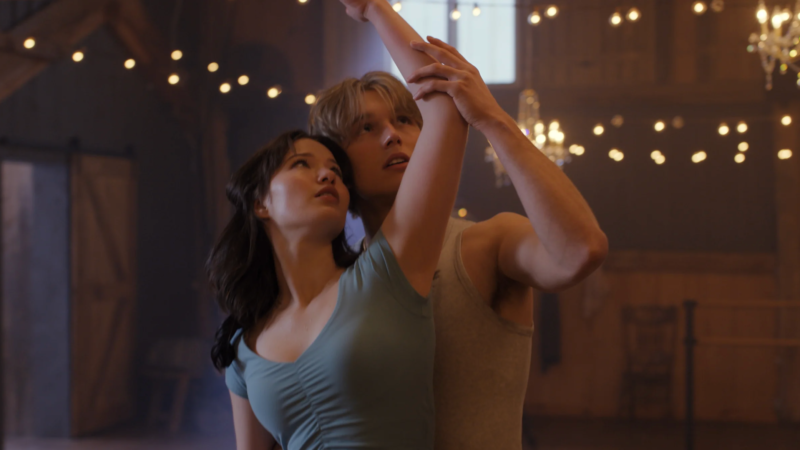
As far as the ending is concerned, I’m fascinated because now that the show is going to go off and write a season two, I get to remove myself even more and enjoy it as a viewer and as a fan. I am a fangirl of everyone involved on the show from the writers down to the crew. I’m just like “okay, what are you going to do? What’s going to happen?” How is Riley going to take all this? Riley was betrayed by everybody. Is her friendship with Adriana going to be broken? How are her and Freddie going to skate together and maintain their first real relationship? They were babies when they first got together. Are Brayden and Riley going to work together? I want to know. And I can’t answer that question myself because now it’s a different version of this story. It’s like Finding Her Edge 2.0. I’m like the prime universe and they’re an AU. I don’t want to be told because I want to watch it but I also need to be told what’s going to happen. Ha!
MM: And you obviously don’t want it to end. You want it to have more.
JI: We want it to keep going. We want to draw this out. Let’s tell a good, fun, interesting story. My dream is for us to have a similar ending as people felt at the end of Dawson’s Creek where everyone felt like that was the correct ending. Even if you disagreed, even if you shipped her with the other one, you’re like “oh, that’s the right one. Good job writers.” But we’re not at the end yet. We’re not there. Come with us.
MM: I have my wants.
JI: We all do! Team Gold Medal, Team Adriana, Team Riley, Team Frediana, Team Braydriana, Team Russo Sisters, Team Everybody. We’re going to get you there.
MM: As you know, I like to ask my signature question in every interview. If you were to construct a donut based on Adriana’s personality, what kind of donut would it be and what toppings would be on it?
JI: I have a good answer for this. It’s a Boston cream filled donut because my girl is a Massachusetts girl in the books. In the show it’s a bit more ambiguous. But she’s filled with Boston cream because she is a masshole. Sorry for our teen audience. It’s probably an old fashioned or plain donut but with a hardened glaze on top that gives a little crunch to it. Inside she’s a little mushy, she’s got a lot going on, should probably go to therapy, never properly mourned her mother, is definitely taking on way too much responsibility in both versions of this story. But it’s hard to get inside. And when you get inside, it’s a whole mess. And we gotta try to get her together. And now I really want that donut.
MM: After talking about all these delicious donuts, I’m hungry for the books! If readers walk away from the final pages of Game, Set, Match and then Wildcard feeling just one thing, what do you hope that lasting impression is?
JI: Let’s celebrate female ambition. Let’s celebrate it in our romantic relationships. Let’s celebrate it in our sisterhood. Let’s celebrate women who are out there busting their ass and going after their dreams. That’s what I want them to take from it.
MM: With the show bringing in a wave of new readers, many are discovering your work without being traditional sports fans. What do you hope these newcomers—who might have come for the show but stayed for the books—discover about themselves or the genre through your stories?
JI: From finding me specifically, not necessarily my books, it’s more… keep going. I don’t know how else to say this. It’s very cliche when I say this to people. I have been in publishing as an author for fifteen years. This has been my most successful year. I have made more money from January to March of 2026 than I have in the previous fourteen years and change beforehand. I could have given up many times. No one would have blamed me. They would have been like “Wow, you got a book published, how wonderful.” Or “wow you published more than a couple books. That’s great. Time to return to your real life and real job.” I could have given up at any point and been considered successful and nobody would have blinked. It would have been easy. It would have been really easy to give up. Because I’d checked certain boxes. Like “oh you got published by Penguin Random House? Call it! You’re good!” If you have bigger dreams for yourself than the world dreams for you, keep going. You just have to keep going. You will never know if you stop. Just keep going.
MM: If you didn’t keep going–
JI: We wouldn’t be here having this conversation ten years later.
MM: You wouldn’t be having cameos and doing all this super amazing, career-fulfilling stuff! Tell us what people can read and when.
JI: Game, Set, Match is out now. Wildcard is coming out on June 9th. And as for books after that, check my socials soon! I’m @Jennifercarolyn everywhere. Hopefully I’ll get to announce something soon.
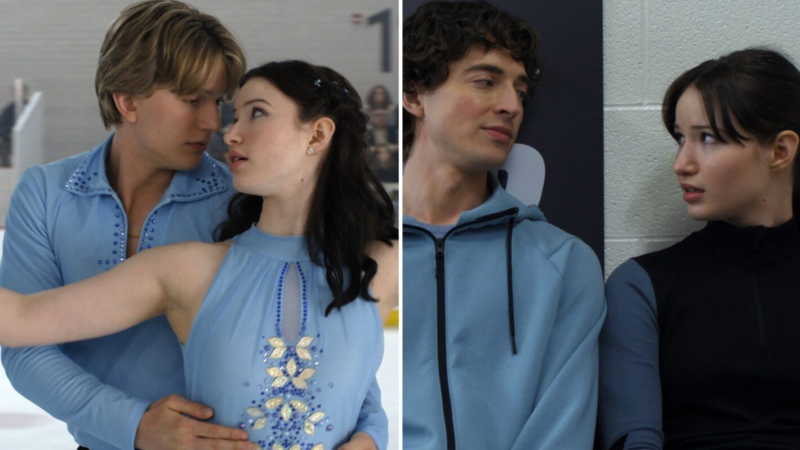
MM: So… for real now, it’s just us: team Freddie, Team Brayden, where do we fall?
JI: Team drama. Sister drama, romantic drama, all the drama. We’re bringing it on.