

Ramona Floyd is a versatile stage and screen actor whose work spans Off-Broadway, television, and film. She has appeared on stage in a wide range of acclaimed New York productions and on screen, she has built a career portraying everything from tough bosses to compassionate caregivers in popular series such as “The Blacklist,” “The Punisher,” “FBI,” “Blue Bloods,” and “Bull.”
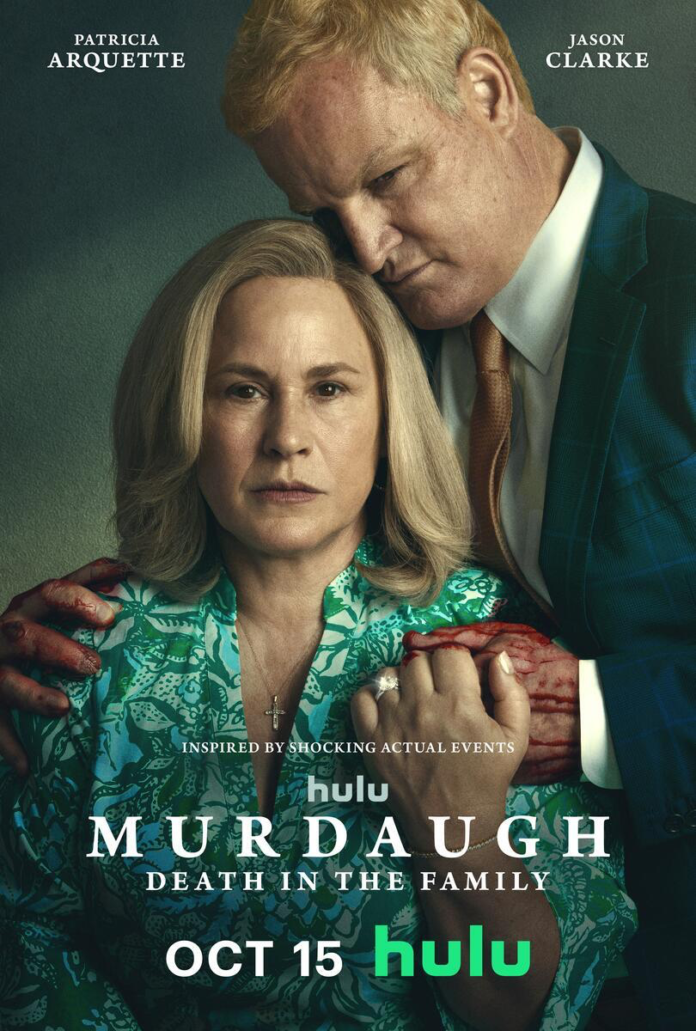
Most recently, Ramona can be seem in the new Hulu drama “Murdaugh: Death in the Family” as Lynn Goettee.
The series follows Maggie and Alex enjoy a lavish life of privilege as members of one of South Carolina’s most powerful legal dynasties. But when their son Paul is involved in a deadly boat crash, the family is faced with a test unlike any they’ve ever encountered. As details come to light and new challenges emerge, the family’s connections to several mysterious deaths raise questions which threaten everything Maggie and Alex hold dear.
The series stars Patricia Arquette as Maggie Murdaugh, Jason Clarke as Alex Murdaugh, Johnny Berchtold as Paul Murdaugh, Will Harrison as Buster Murdaugh, Brittany Snow as Mandy Matney, J. Smith-Cameron as Marian Proctor, Gerald McRaney as Randolph Murdaugh and Noah Emmerich as Randy Murdaugh.
Inspired by the popular “Murdaugh Murders Podcast,” the series hails from co-creator and showrunner Michael D. Fuller (“Quarry,” “Rectify” and “Locke & Key”) and co-creator Erin Lee Carr (“Britney vs Spears,” “I Love You, Now Die” and “Mommy Dead and Dearest”). Nick Antosca (“A Friend of the Family,” “The Act” and “Candy”) and Alex Hedlund for Eat the Cat are executive producers along with Mandy Matney, David Moses and Bill Johnson. Steven Piet executive produced and directed episodes 101, 102 and 108. Patricia Arquette and Jason Clarke also serve as executive producers. UCP, a division of Universal Studio Group, is the studio.
Check out our Q&A with Ramona:
How did you get involved with “Murdaugh: Death in the Family”? Are you a fan of true crime?
Ramona: It’s kind of funny because I’m not generally into true crime, although my millennial daughter is and she was a big fan… I didn’t really know that much about it, but I knew she would know… It was great because she gave me a lot of insight into the story. Once I was cast, I could do some more research and stuff, but she really gave me some insight for the audition and getting started and all that kind of stuff.
That is a happy, not so happy coincidence, I guess, given the contents of the show.
Ramona: Yeah, it’s dark material to say the least. I was really invested in the story. It’s really kind of a big story, because you’ve got this generational aspect of this family that has sort of proceeded without any sort of challenges to their power and how that sort of trickled down through at least three generations in the story. And the script was so beautifully laid out and informed by the podcast, so all of the work that had gone in, years prior to me being involved, was such a deep investigation, not only in the incident and the stories around it, but just the broad spectrum of this family. For generations, they had no consequences for their behavior until it got to a point where they were impossible to ignore. I found that fascinating. I play Alex’s sister, Lynn, the only female of that generation of the kids, of the Randolph children. I thought that was a real interesting story, just the fact of how Lynn navigates being in this family and knowing what she knew. She’s an intelligent woman, but how long can you put on the blinders and keep going, right?
Yeah, your character is in a very tough situation there.
Ramona: There’s a scene in one of the episodes where Cindy, who plays our mother who’s suffering from dementia, there’s a point in a scene where she sort of comes out of the fog, and remembers that her husband had put out an obituary for her at a time when she was threatening to leave him because he was catting around. Knowing that Lynn was clearly around when that happened, how did she manage knowing that her father had done that? They’re all lawyers, the men, and they all have all this power, and just to be in the middle of that, knowing what you can and can’t do— for me, Lynn was just someone who kept her head down, cared about her family, and wanted to be a good family member. A good wife, mother, that sort of thing. But how do you keep your head down and keep going when you know that stuff?
When you put it that way, like, we know that there’s more to the story because of everyone involved, but when you break it down like that, it’s even more interesting.
Ramona: Yeah, I think so. It’s one of those things when you have a family, like that, and you’re bringing someone new into it, and then oops, something comes out. It’s just, “oh, well, we don’t want to talk about that.” And then as the story continues to unfold and you’re holding onto that love of your family. This is something that matters to you. It’s your entire identity, but things just keep coming out. Where is the point of no return? When does it all catch up with them? I just found it interesting. I thought the script did a great job, the production as a whole, and hats off to hair, makeup and wardrobe/costuming. They worked so hard. Lynn had so many statement necklaces. I cannot tell you how many statement necklaces she had. They really wanted to make sure that the reality and the emotional truth of that family was vivid and recognizable.
Yeah, it is very interesting that this is a real case, and it does involve real people, and now there’s your project where it’s more dramatized. What was it like for you to portray someone of a real family, and then also having to layer on this tragedy?
Ramona: There was a whole thing about getting the right look. That’s part of what brings you into the character, especially for real people— the wardrobe, hair, makeup—those things do help you embody the character. I didn’t have any sort of reference point or conversations with the people involved. This is a fictionalized story based on these events, and while there is an emotional truth, it’s not a documentary. There is an effort to bring in what I know of this character and the environment and these sorts of events. I mean, I’m from Texas originally. I grew up in the South. I’ve met a few Alexes and Maggies in my day. I’ve met some Lynns in my day. I bring my experience to that type of character, and once that’s aligned with what the producers and the writers and directors are interested in, then it’s a matter of just filling it in. Once you’re on set, and you’re with your siblings and your sisters-in-law, our job was to fill out the space around this family. You know what I mean? We’re there to bring sort of an emotional truth to the fact that this was a family that was tight knit. They had a lot of events together, and so we were there to build that environment. So, by the time we’re in the trial scenes and things, it felt like a family. Everybody’s got their own personalities and their own dynamics, and it’s all kind of fits together.
It’s almost like the collective family unit is its own character, if that makes sense.
Ramona: Yeah. You can’t really fake that. It something that is generated by the efforts of everyone. It’s the collaboration. It reminds me of theater. Noah [Emmerich] had a great sense of humor and kind of kept things light in between setups because this is dark and tough material. And I think when we started shooting, it was on the anniversary of the boat accident and when we wrapped, the last day was, I think, was either day of or close to it, the anniversary of the actual shooting. People are aware of that on set, and the respect is in there, you know. They really do give space for the victims and the other people who were involved who passed from that experience. So, I thought that was really nice. You know, it’s not just the story of what this individual did, but it’s the story of all of the people affected.
What do you hope audiences take away from this show?
Ramona: If it walks like a duck and talks like a duck… Yes, we love our loved ones, and we want things to be a certain way, but what does it take for us to make a change if something is not going well? I think a lot of us always feel like if you just hang on, it’ll work itself out. I mean, someone like Lynn felt like someone who just tried to do the best good that she could. I think that it’s okay to question when someone you love is, you know, not adding up, especially in situation like this. There’s a kind of enabling quality of not asking questions. There’s only so far that can go before it just gets worse. I think it’s a reaction and not a solution, to be in denial of something like that. Nobody knows when it is the right time to make a choice. Even though it’s hard, it’s going to be better in the long run. But you know, we’re resilient humans. And there’s a lot of people in this story who move forward afterwards and try to make the most of their lives. Bad behavior doesn’t only affect the people in the immediate orbit. It radiates out.
#MURDAUGHONHULU